
Melissa Ashley Hernandez
June 10th, 2023
Deciding that a job in her academic field of study (politics) sounded exceptionally un-fun, Jenny proceeded post-college to live in 7 different countries across three continents taking jobs as an assistant editor, a live-in nanny, an English teacher, a university administrator, and a full-time dog walker. These occupations allowed her time to pursue a patchwork education in circus across various institutions including Circus Warehouse (NYC), Circus Oz (Melbourne), and Centro Acrobatico Fedriani (Madrid), alongside participation in innumerable private lessons, workshops, and festivals.
While she’s tried her hand at just about everything, aerial hoop is Jenny’s primary discipline followed closely by her invented apparatus ‘the infineight,’ made in collaboration with metalworker Tim Omspach. She has also performed aerial harness/vertical dance, spanish web, aerial chains, hula hoops, aerial spiral, and worked at great heights on crane gigs with Fidget Feet Aerial Dance Theatre. She might even do verticals if you pay her a lot of money, and she is a born 3-high middle.
Jenny is a US citizen and aspiring permanent resident of Ireland. When not on tour, you can find her snuggling her two giant dogs on the coast of county Sligo. She is proud to also be supported by the Arts Council of Ireland, and her beloved team over on Patreon. You can find her all over the internet under the name @circlecirque.
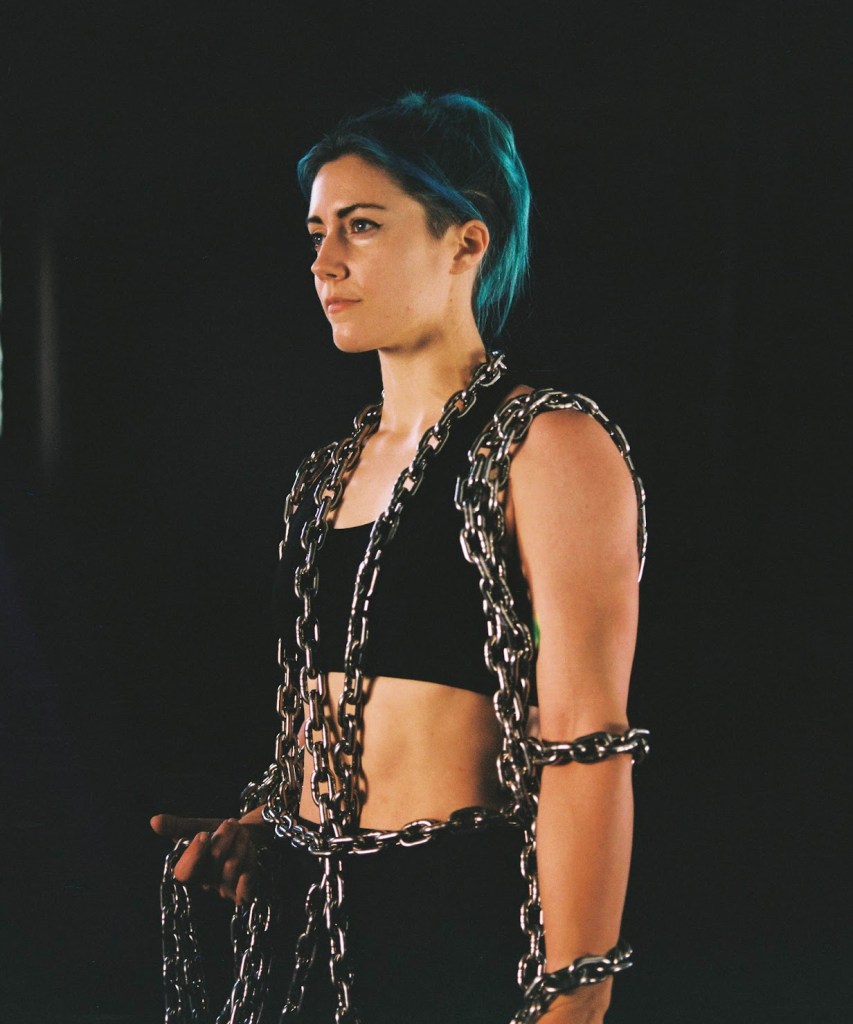
When we think of circus, we think of the experience of watching performers and acrobats “fly through the air with the greatest of ease.” Whether it be trapeze artists, aerialists, or fire performers, we always find ourselves asking the same question: how do they do that?
Well, Jenny Tufts is here to give us some insight on exactly that! She is well-versed in many kinds of aerial performance art and has graciously given us the opportunity to ask her about it. In this interview, Jenny talks about what it’s like to work as a full-time aerialist, her aspirations for her future, and what to do if you want to chase the “wheeee” like she does!
(Read the Carnival issue here!)
Interview with Jenny Tufts
TMP: We’ll start it off with a basic question, what got you into aerial performance? How did your journey start?
JT: I got hooked on aerial arts through the recreational scene in NYC just after graduating college – I was working a bunch of odd jobs (academic administrator, barista, nanny, dog walker…) and trying to decide what to do with my life, since a job in my field of study (politics) turned out to be way less appealing than The West Wing made it sound. I’ve never done intensive gymnastics or dance training, but I’ve always loved adrenaline and challenging my body, so when I discovered aerial hoop it was love at first sight!
TMP: Is there a type of aerial performance that you like the best? One that you specialize in?
JT: I specialize in spinning bar apparatuses. In contrast to ‘floppy apparatuses’ (like aerial straps, or verticals like fabric or rope), most steel-based aerial apparatuses no matter what their shape will have similar properties, and once you’ve mastered one it’s fairly simple to translate that knowledge to other landscapes. My foundation in aerial hoop gave me the tools to explore other bar apparatuses, like spiral, with confidence and comfort. And while I wouldn’t say I’m stage-ready in many other disciplines, I do train or have trained in dozens of other circus arts. I LOVE being a student and am a huge believer in having a diverse movement practice, both for practical injury prevention and to inspire new ways of approaching your home discipline!
TMP: What does your training process look like? What does your training look like when you’re contracted versus when you’re in your off-season?
JT: The unfortunate thing about circus is that, unlike every other professional sport, we don’t typically have an off-season. France has a brilliant artist unemployment scheme where performing artists are paid a livable wage during the months they’re not working so long as they’ve clocked enough hours in a performing job, which allows them to appropriately recover from the demands of a long contract, upskill, and/or create their own independent projects! Most artists around the world don’t have this luxury. …Like most freelancers, my calendar is a hectic patchwork of gigs. I prioritize performing, but also teach a few aerial intensives and festivals per year. I’m extremely fortunate to be supported by the Irish Arts Council, and through their grant programs have for the last several years been able to schedule paid time to work on my own creative and technical training, usually with the guidance of outside mentors. I can’t overstate how much this has transformed my work, especially coming from the US where circus arts funding not tied to a product is virtually unimaginable.
When I’m on contract, keeping my body healthy is the top priority: time in the studio is mostly spent conditioning and doing my physio exercises until I’m confident I can handle the show load without risking an overuse injury. When I’m at home and have the luxury of full training days, I’ll often go to the notes app on my phone where I write down quick choreo ideas and follow one or two of those rabbit holes for a while. These ideas come to me while watching my own work, watching others, when I’m randomly in the shower, and sometimes even in my dreams! At least half the time I try something and realize my understanding of physics or anatomy was flawed and the idea is impossible – but occasionally it works, and more often it leads to a totally different surprise.
TMP: What are some of the physical and emotional challenges you face while learning new aerial skills? How do you work through or around them?
JT: I went through quite a rough couple of years where I’d feel fear in the face of a new skill, and then get so overwhelmed with anger at myself for feeling that fear that I’d give up in shame. I thought all I needed to do was toughen up, commit, just do it, all those gym clichés – I thought that my peers who were doing the things that scared me were just braver than me, that my fear was an inherent personality flaw. But I see now that what those peers had wasn’t necessarily more bravery, they just had more familiarity with the apparatus. Nothing can substitute for time, and don’t discount what a dramatic difference time can make. I like to imagine fear is my little buddy just doing his job, keeping me alive – he deserves to be listened to, and then we can negotiate whether that particular warning is valid or not.
TMP: What kind of preparation goes into each performance?
JT: All aerialists should have as much rigging knowledge as they can acquire, and check their own rigging before every session. Whether you’re in a class or on stage, there are never too many eyes on the equipment and no question is a stupid question (if your rigger makes you feel stupid for asking a question, fire their ass and find someone who actually cares about your safety). I make sure I’ve run the act in the costume (nothing makes an act sloppy or dangerous like fabric that’s slipperier or grippier than you’d anticipated!), that I have my preferred liquid chalk on hand, and that my body is warm and ready. My favorite grounding exercise comes from my mentor Rachel Strickland, who recommends asking yourself: ‘Where are my feet?’ It gets me right out of my head and into my immediate physical surroundings.
TMP: What is it like being in the air? How does it make you feel?
JT: Once in a workshop the leader asked us each what our core motivation for our work was, and I said, ‘I’m just out here chasing the wheeee!’ And I think that’s pretty apt. Nowhere else can I be more present, in a playful conversation between my body and the apparatus. I like these heavy solid steel apparatuses because they feel more like a dance partner than a prop – sometimes they support you, sometimes they reject you, and when you work as a team with that incredible force of spin it’s pure magic. Aerial also gave me my first environment where I felt consistently powerful. Raised as a woman, and a chronically shy one at that, it’s not a feeling I experienced much prior to entering the aerial world and very much enjoy.
TMP: Chronically shy? That raises more questions! I know you’ve been doing this for a while, but do you still get performance anxiety? How do you combat that?
JT: Absolutely! I suspect the day I feel zero performance anxiety should be the day I quit, since the butterflies signal to me that I still care deeply about it. Good preparation is key to quieting nerves, but also the acceptance that in live performance, things go wrong all the time. Most of the time the audience doesn’t even notice. The more imperfect performances I give, the more I can relax into the knowledge that it’s not a big deal and happens to everyone.
TMP: Can you discuss the teamwork aerial performances? How do you work with other performers and technicians to create a smooth experience?
JT: One of the most intimate ways aerial artists (who are majority soloists) work together is through counterweight systems, where one artist lifts another via a pulley system. Getting the timing and height of the lifts perfect can make or break an act, and I love counterweighting aerialists I know because I can usually predict their needs better than any rigger. My girlfriend Aisling Ní Cheallaigh (also a world-class aerial hoop artist, go follow her!) and I always lift for each other when we can, and I feel much more relaxed knowing that the person on the other end of the rope knows my discipline and body language inside and out.
TMP: Any tips for beginners wanting to get into aerial performance?
JT: Learn broadly – take as many classes in as many disciplines with as many teachers as you can! Not every teacher/studio is the right fit for every student, so shop around until you find a culture that feels like home – and even then, travel to festivals or outside workshops whenever you’re able. Also, go see some circus. Attend a Fringe festival, see anything that comes to town big or small. As Stephen King says of writing: ‘you learn more reading a bad book than a good one,’ and in the same vein, I never feel like I’ve wasted time watching a show.
TMP: Thank you so much for this interview, it’s been incredibly fun to hear you talk about your passion so deeply! Is there anything I haven’t asked that you would like to mention?
JT: If you’d like more in-depth writings on professional aerial life, exclusive access to full shows/act videos, and first dibs on booking intensives, sign up to my Patreon! It’s a brilliant way for fans of my work to show monthly support, and for me to connect to a more intimate audience than the megaphone of instagram.
I suppose my last tip for anyone wanting to pursue aerial professionally is just this: show up, in person, over time, and be kind. That’s it. Call it nepotism, but people really only hire people they know – so get in the room. Show up to festivals, take lessons from people you admire, ask thoughtful questions on CircusTalk panel zooms… there are endless ways to engage. And know that these interactions will build up over time. People enjoy helping people they like. Good luck!
AERIAL LIGHTNING ROUND:
Question: Favorite genre of music to perform to?
JT: I don’t really understand genres anymore, but usually something instrumental with a driving beat.
Q: What was your favorite costume?
JT: In Disneyland Paris’ Le Roi Lion I got to be a hyena in a full velvet catsuit – I felt like a kid in footie pajamas and it was so cozy!
Q: Biggest inspirations in the industry?
JT: Aisling Ní Cheallaigh, Dreame Frohe, and Jennifer Cohen have always been some of my favorite technicians to watch – Emilia Dawiec is another up-and-coming hoop artist who I really enjoy watching these days. I also get a lot of inspiration from movement artists outside my field, like Yvonne Smink (pole) and Aime Patching (handbalance), and always look to Rachel Strickland for wisdom in all things related to creative life.
Q: Most challenging/uncommon place you’ve performed?
JT: Probably atop a crane in Gweedore, in the remote northwest of Ireland – the views were SO stunning I kept forgetting to wave at the kids below!
Q: What has been your most memorable or unique performance experience so far?
JT: In 2022 I got to premiere a show I made with my partner Aisling and two of our close friends. It’s the closest I’ve been to having creative control over a full-length piece of work, and while that responsibility was often harrowing, it was also incredibly rewarding! I screwed wheels onto our home couch so we could use it as a set piece, got to see the apparatus I invented make its stage debut under the capable hands of our friend Jen DeBrún, and shared the process with some of my favorite people. I’m looking forward to more of this in the future! (PS: the full show NASC is available to watch on my Patreon.)
A big thank you to Jenny for allowing us such a wonderful interview! If you’d like to support her, you can visit her website, sign up for her Patreon, or follow her on Instagram, Tik Tok, Facebook, or YouTube.
 Wild Willow Magazine