Let’s Talk: Criticisms of Instapoetry

Ada Wofford, Senior Editor
April 22nd, 2021


Part Four

            In this installment, I look at some of the criticisms of Instapoetry, including my own. I also pull from establish critics and academics, such as James Longenbach, because I want to illustrate the broader conversation on poetry that I am participating in when I write about Instapoetry— these are books I read and things I learned as both a student and a writer and I point them out, not to disrespect them or denounce them in anyway, but to highlight my thought process and to specify what ideas I’m attempting to push up against in my own work. The work of critics like Longenbach and Rebecca Watts is an invaluable contribution to the larger conversation surrounding poetry and literature and I see my writing as building off of their work, not as an attempt to blanketly refute it.

            Rebecca Watts’ article, “The Cult of the Noble Amateur” is a scathing tirade against contemporary popular poetry, including, but not limited to, Instapoetry. Watt’s opening paragraph really sets the scene:

Why is the poetry world pretending that poetry is not an art form? I refer to the rise of a cohort of young female poets who are currently being lauded by the poetic establishment for their ‘honesty’ and ‘accessibility’—buzzwords for the open denigration of intellectual engagement and rejection of craft that characterises [sic] their work. (13)

            There are lots of things to take issue with here. What exactly is the poetic establishment, and is it something we should even care about? Then there’s the question about the definition of intellectual engagement: What is it and why is it so necessary in order for a work to be deemed worthwhile? And whose intellectual engagement are we talking about? As Milton writes in Aeropagitica, “[. . .] a wise man like a good refiner can gather gold out of the drossiest volume, and that a fool will be a fool with the best book.” If Watts cannot find something to appreciate in this new form of poetry, is it fair to ask if it’s her own fault? But to Watts’ credit, however good a refiner you might be, Instapoetry doesn’t give you much material to refine. Watts quotes Kaur’s publisher, Kirsty Melville: “[. . .] the medium of poetry reflects our age, where short-form communication is something people find easier to digest or connect with” (13). This makes sense, but does it make good poetry?

            In my essay on Kaur, I critiqued this untitled poem from milk & honey (there is a visual component to this poem that I am not concerned with but will describe here for the reader: underneath the text is a line illustration of two hands reaching up):

how can i write

if he took my hands

with him (121)

            I used this poem to point out Kaur’s lack of rhythm and meaningful line breaks. My analysis of this poem was principally informed by James Longenbach’s book, The Art of The Poetic Line, in which he writes: “More than meter, more than rhyme, more than images or alliteration or figurative language, line is what distinguishes our experience of poetry as poetry, rather than some other kind of writing” (xi). I took this sentiment to heart and walked my readers through my own rewrite of Kaur’s poem; one that paid attention to stresses, scansion, and above all, the use of line-endings (line-endings is Longenbach’s preferred term). Although somewhat lengthy, I am going to reproduce this aspect of my essay here because it perfectly illustrates what I now believe is an artistic crime (on my part only. Longenbach is not guilty of this. I applied what I learned in his book in a manner I now disagree with). I will bold the phrases I now find particularly problematic as they should prove useful in our discussion going forward:

            In his discussion of line-endings, Longenbach writes, “But even the arbitrary must be driven by necessity, and necessity can be judged only on a poem-by-poem basis: what does the language of this particular poem require at this particular juncture?” (63). If we look at the use of syllables in the above poem we get, 4, 5, 2. There’s nothing to suggest this was done purposefully or out of necessity. An examination of the use of stresses tells the same story—Nothing appears deliberate or driven by necessity. The only remaining conclusion is that the line-endings are done purely as a visual component. This is reinforced by Kaur’s deliberate choice to eschew punctuation and capitalization with no apparent meaning behind this choice, save for the previously mentioned visual component.

            To gain a better understanding of Kaur’s poetry, it’s worthwhile to explore what this poem would look like if we attempted to inject some poetic elements into it, such as attention to syllables and stress. By introducing syllabic-verse the line-endings will become more meaningful.

How can I write

If when he left

My hands he took

            It’s still sloppy but at least it has rhythm, purposeful use of syllables, and it no longer has that clunky enjambment at the end. The reason this is better than the alternative, “If when he left/he took my hands” is that now “he” is the second to last syllable in the last two lines. But we can still improve it:

How can I write

If when he left

My hands he kept

            Now there is more information in the poem and “left” pairs nicely with “kept,” both having the same vowel sound. All three lines function as pairs of iambs now as well. As for context, it is now made clear that the narrator had given her hands at some point in the past. In the context of the entire book we can infer that she at some point gave her hands to a lover, but in the context of the original poem we are not given enough information.

            The big issue with this poem, really with most of Kaur’s poems, is that it goes nowhere. It makes a singular statement, “He took my hands and now I can’t write.” And when I rearrange this to introduce rhythm into the writing it’s like hearing a melody that never resolves itself. Just as the rhythm gets established, the poem is over. It becomes obvious from this exercise that a poem this short actually suffers from the inclusion of classic poetic elements. Now, instead of having a short poem with no rhythm, we have a rhythmic poem that feels incomplete. (“Understanding”)

            I refer to this as an artistic crime because there’s absolutely no need for it. I’m not writing a poem inspired by Kaur’s poem, which is something many poets do—No, I’m tearing it to shreds in the name of “proper” poetry. I claimed that my modified version is “better” and that I can “improve” it further as if an objective good existed in poetry. In his introduction to Russian Formalist Criticism, Gary Saul Morson writes: ”Jakobson wrote that ‘poetic form is the organized coercion of language’ (quoted in Eichenbaum, 127), that is, it is ‘practical’ language deformed into poetic language” (Lemon, loc-189). This is exactly what I was attempting to do with Kaur’s poem: deform her practical and ordinary language into a “poetic language.” And while the Russian Formalists, Harold Bloom, and others all believe there to be a strict distinction between poetic language and ordinary language, no one can agree on a single definition.

            Despite the ambiguity of the term poetic language, it’s a widely held belief that poetry needs to be informed by academia. In preparation for writing this essay, I posted a question on all of my social media accounts: “For a research project: Do you enjoy Rupi Kaur and the genre of Instapoetry? If so, why? What do you get out of it? Why is it valuable?” Granted, I’m involved in the literary community and know many editors, poets, and writers but not everyone who replied exists in these circles. I did not get a response from anyone who really enjoyed Kaur or Instapoetry, but some were appreciative of the fact that it’s getting people into poetry. One poetry editor and teacher commented, “[. . .] While I rather loathe it myself, I’ve met too many students who love it and came to poetry through that doorway to dismiss it entirely.” Two poets I know, both pursuing their MFA, commented their disdain for Kaur, saying her poetry lacks depth and that, “Reading her is like nails on a fucking chalkboard.” One commenter, who works in computers (i.e. not involved with the literary community or with the academy), referred to Instapoetry as an inevitable evolution of poetry due to the way we now consume information. While they do not personally see the appeal of this genre, they thoughtfully added, “If it makes people feel something and they connect with it in a way they find meaningful isn’t that valid?” This sentiment contrasts nicely with a comment from an MFA student who admitted that Kaur is highly successful but added, “[. . .] it’s not like she’s going to win some kind of major book award.” This brings us back to the academy and Watts’ “poetic establishment.”

Who Gets to Write Poetry?

            This is the essential question at the heart of this debate. One of Watts’ issues with contemporary popular poetry is that anyone can do it (15). But why is this a problem? Furthermore, why is there such an emphasis on complexity or difficulty? The most troubling thing I said in my critique of Kaur was that “It becomes obvious from this exercise that a poem this short actually suffers from the inclusion of classic poetic elements” (“Understanding”). When I wrote that, I knew it wasn’t true and why I didn’t take the time to qualify that statement I’ll never know. What I should have said, is that a very short poem can suffer from the particular poetic elements I was working with (stress, scansion, line-endings). William Carlos Williams’ poem, “The Red Wheelbarrow” is the perfect example of a poem being short and simple yet critically acclaimed:

so much depends
upon

a red wheel
barrow

glazed with rain
water

beside the white
chickens. (56)

            I made a point to format Williams’ poem exactly how it is in the book because formatting is an essential part of all visual poetry All written poetry is visual poetry, but some poems utilize this element more so than others. Reading this poem, it seems to me that Williams’ line-endings are primarily motivated by this visual element. The poem looks very balanced and clean. The line-endings can be said to convey meaning by emphasizing certain words, but they do not function rhythmically as emphases, at least not to my ear. This poem is a single sentence divided into four stanzas or sections consisting of varying syllables (6,5,5,6), which create a certain symmetry but not necessarily one you can hear. The poem certainly has a rhythm to it but nothing formal or precise. In other words, this reads as “practical language” but it is not framed or presented as practical language. The poem’s minimalism emphasizes the minimalism of the scene itself and highlights the importance that everyday objects can have to us. But why is this poem so widely celebrated in the academy while Instapoetry is shunned? Compare it to this untitled poem by Kaur:

for you to see beauty here
does not mean
there is beauty in me
it means there is beauty rooted
so deep within you
you can’t help but
see it everywhere (192)

            Right away, we can see that there is not as much attention to formatting or to the visual balance of the piece, though Kaur does create a nice symmetry in the structure of the lines (3,1,3). The number of syllables appears arbitrary (7,3,6,8,5,4,5) and the line-endings don’t emphasize a particular rhythm, though there is the symmetry of “beauty here” and “beauty rooted.” The first three lines set up the issue or concern and the last three provide the explanation. This pair of three-line sections pivots on the center line that connects the issue and explanation. The rhythm might not be as smooth as Williams’ but there is still some rhythm to it. The two most important similarities between these two poems is the use of minimalist technique and ordinary or practical language.

            Despite these striking similarities, one is considered a classic of American poetry and the other is considered mediocre pop culture. Even I admit, something about the Williams’ piece moves me in a way the Kaur piece does not. I personally prefer writing that looks outward at the world and interrogates the quotidian (such as focusing on a wheelbarrow), but many others who do not share my preferences also despise Kaur’s work yet appreciate Williams. I do not think it is the subject matter of Kaur’s poetry that elicits such negative responses as so much of contemporary poetry is focused on the self, the body, identity, trauma, and growth; and all of these themes are front and center in Kaur’s work. But I don’t think it is Kaur’s lack of “poetic language” being used that upsets people either. I think most people (myself included, at least before my recent conversion) share in Watts’ disdain at the idea that poetry is something that “anyone can do” (15).

            Gatekeeping like this is similar to what Theodor W. Adorno discusses in regard to musicians in his article, “On the Fetish-Character in Music and the Regression of Listening.” Not only does Adorno lament the supposed death of the listener as Watts laments the death of the reader, he criticizes the idea of people attempting to learn to play music for fun as opposed to devoting their entire lives to the study of music:

In the piano scores of hit songs, there are strange diagrams. They relate to guitar, ukulele and banjo, as well as the accordion—infantile instruments in comparison with the piano—and are intended for players who cannot read the notes. They depict graphically the fingering for the chords of the plucking instruments. (290)

            Adorno is eviscerating the way I and millions of other people began playing their instruments. While Adorno had his Marxist motivations to fuel his fear of the “dumbing down” of the masses, this passage paints Adorno as nothing more than an uptight snob who is frustrated by the fact that not everyone is as smart as him. Kurt Cobain learned to play guitar by reading the strange diagrams Adorno speaks of and went on to change the history of rock music. Granted, Adorno would consider rock music “light music” (that which is inferior to “serious music,” which basically means classical music, though he loathes that term). But whether or not some snob in the academy appreciates Cobain’s music, it will never change the fact that his music and his lyrics have touched millions of individuals and positively impacted their lives.

            If Shakespeare is to poetry what Mozart is to music—Or, more simply, if what the academy considers “proper poetry” or canon poetry is the equivalent to what Adorno considers, “serious music,” then Instapoetry is what Adorno would call, “light music.” Interestingly, the popularity of this “light music” owes itself in part to the rise of the radio—Just as this new form of poetry owes its popularity to the rise of Instagram and social media sites as a whole. Adorno loathed “light music” and the rise of jazz just as critics like Watts loath Rupi Kaur and the rise of Instapoetry. Of course, jazz and rock are now part of the academy. There’s even an academic journal called Rock Music Studies that features articles analyzing rock albums the same way any literary journal features articles analyzing novels and poems. I believe the most valuable thing we can do as academics is to stop being snobs and focus our attention on how Instapoetry functions and what readers are getting out of it.

            In our last installment, we will dig into just how Instapoetry functions and wrap up the series by looking at the future of Instapoetry.


You can follow Ada Wofford on their Twitter: @AdaWofford.


Let’s Talk: Rupi Kaur and Instapoetry

Ada Wofford, Senior Editor
April 16th, 2021


Part Three

            Rupi Kaur is easily the most famous Instapoet in the world. A 2018 article in The Atlantic titled, “How Instagram Saved Poetry,” explores Rupi Kaur’s immense success and the new direction of poetry:

Rupi Kaur is a case study in how dramatically the world of poetry has changed [. . .] The 25-year-old Canadian poet outsold Homer two years ago: Her first collection, milk & honey, has been translated into 40 languages and has sold 3.5 million copies, stealing the position of best-selling poetry book from The Odyssey. (Yuan and Hill)

            The publication and success of milk & honey was a catalyst that turned poetry, for perhaps the first time, into a highly profitable industry:

According to one market-research group, 12 of the top 20 best-selling poets last year were Insta-poets, who combined their written work with shareable posts for social media; nearly half of poetry books sold in the United States last year were written by these poets. This year, according to a survey conducted by the National Endowment for the Arts and the U.S. Census Bureau, 28 million Americans are reading poetry—the highest percentage of poetry readership in almost two decades. (Yuan and Hall).

            Kaur first gained notoriety in 2015 when she uploaded a photograph of herself with a menstruation stain on her pants and bedsheets on Instagram and it was removed for violating Instagram’s standards. The photo was part of a series on menstruation Kaur was working on as part of a college project on visual rhetoric.

(Saul)

            As you can see, there is nothing pornographic about this image and yet, it was removed twice from Instagram for going against their standards. Kaur was attempting to position this in contrast to popular porn Instagram accounts that sexualize women but go uncensored. The censorship of this work is what first put Kaur in the spotlight and led to her eventual fame. Lili Pâquet writes: “The attempted censorship of her work positioned Kaur as a cultural producer who appeals to women (particularly women of color) who are suppressed, shamed, and silenced” (298). Kaur’s personal experiences inform much of her poetry. Kaur’s poetry is unique in the way it is presented, not just because it is often designed with Instagram in mind, but in how it is presented on the page as well.

            Kaur’s poetry is sometimes referred to as a kind of ekphrasis, but Kaur considers her work to be “design poetry” (Kruger). Here is an example from milk & honey

(Kaur 111)

            In my essay on Kaur, I argued that this poem does not count as ekphrasis because, “[. . .] it is not Kaur’s words that amplify and expand the meaning of her illustrations but the other way around—It is her illustrations that attempt to amplify and expand the meaning of her words” (“Understanding”). Now I believe I was too strictly adhering to the particular definition of ekphrasis I had found and so, I don’t see why this poem cannot be considered as such. What’s important to recognize though is that metaphor only exists in this poem via the interplay between text and illustration. Furthermore, the title essentially functions as the ending of the poem. So, while this might be considered ekphrasis, Kaur’s insistence that it’s “design poetry” is a better fit considering how Kaur manipulates the different elements of the poem. I point this out because design poetry is not a widely recognized genre of poetry (if it’s recognized as a genre at all), unlike ekphrasis, which is a very old form of poetry that is widely recognized and studied by scholars. This is one of many instances in which one can place Instapoetry outside of the realm of what might be considered “traditional poetry.”

            Here is a more recent poem that was published to Kaur’s Instagram account December 15, 2020:

            In this example, the illustration does not engage with the text as in the previous example. Some of Kaur’s pieces have no illustrations such as this untitled poem from milk & honey: “my tongue is sour/from the hunger of/missing you (116). And some pieces are written in prose. So, while some of Kaur’s work might necessitate the need for a new term such as, “design poetry,” much of her work functions within the more traditional spaces found within prose and written poetry.

            But Kaur’s not the only one creating such work. Kaur’s influence on Instapoetry is undeniable. Search for #poetry and you’ll find a number of imitators, some almost as successful as Kaur. Here is an example from a popular Instapoet who goes by Atticus:

            Atticus often makes posts with no visual element, but the writing is similar to this one. Notice the use of hashtags in the description. Hashtags are an integral part of Instapoetry, functioning as simple metadata tags users can search for, but sometimes hashtags are used to add context to the post itself or even subvert certain conventions or expectations. In the article, “Selfie-Help: The Multimodal Appeal of Instagram Poetry,” Lili Pâquet argues that the use of hashtags actually qualifies as a form of ekphrasis:

While poetry makes use of ekphrasis in order to verbally describe visual settings, scenes, and items, Instagram poets often also use hashtags in a kind of modern ekphrasis, making their visuals (whether selfies, illustrations, or typewritten poems) available by describing them in search terms [. . .] The use of ekphrastic effects in hashtags and poems is supported by the images in the selfies to create an overall effect; that is, the human brand of the Instagram poet. (300)

            The way these hashtags are used varies from poet to poet. The December 15th post by Rupi Kaur, shown above, only uses a single hashtag: #homebody (Homebody is the title of her new book). In the Atticus post, he uses only three hashtags. But a beginner Instapoet trying to get recognized will use a slew of different hashtags:

            The use of hashtags helps poets get discovered, it helps readers discover new poets, and it places pieces in conversation with one another by unifying them all under specific labels. This aspect of community, of an online community, is as essential aspect of Instapoetry and a big reason why it’s so successful. In our next installment we will dig into the criticisms of Instapoetry.


You can follow Ada Wofford on their Twitter: @AdaWofford.

Let’s Talk: Alt-Lit

Ada Wofford, Senior Editor
April 7th, 2021


Part Two

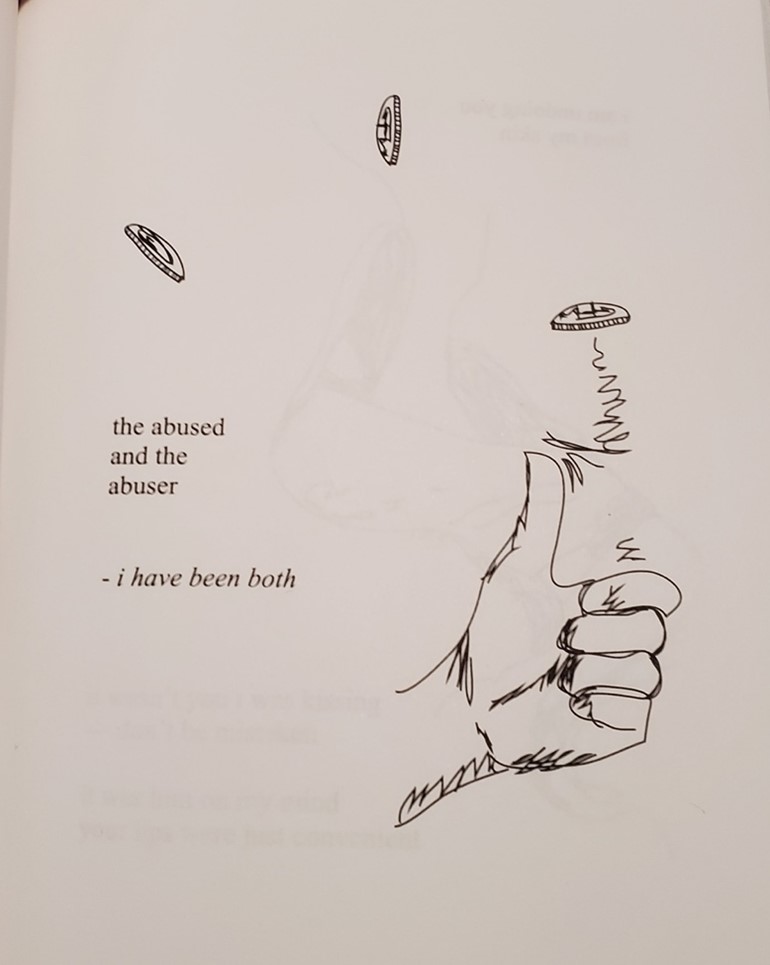
            Alt-Lit was born out of blog and Tumblr culture in the late ’00s. Although this culture began online and had an international reach, it’s primary physical location would have to be New York. The genre references internet culture heavily, often eschewing capitalization and punctuation; the way one might write online. In my essay on alt-lit I cover the two key figures of the movement, Tao Lin and Steve Roggenbuck.

            Tao Lin is easily the most famous of the movement and has somehow emerged from the fall of alt-lit successfully, despite having a relationship with an underage girl and being accused of abusive behavior. His novels Taipai (2013) and Trip (2018) have received modest but nonetheless mainstream success. The fact that Lin could write in a manner that would find him success outside of the genre of alt-lit makes sense. Alt-lit was primarily concerned with poetry, and at the time poetry did not sell the way it does today. Lin’s focus on prose was unique within the movement but he dabbled in poetry as well; and when he did, he stood out as unique among the other poets of the genre. While his early prose certainly contains a number of the alt-lit tropes I documented after surveying the canon, his poetry is much quirkier and idiosyncratic. Take this example titled, “hamsters are heads with little characteristics on the head, part one”:

in florida a giant hamster lays in bed worrying about its future

the hamster has bad eyesight

and many other problems

later that night the hamster drives its car around

listening to sad music; the master lightly drums its paws on the

steering wheel the hamster is alone

but not for long: at home three waffle friends wait

cooling inside a countertop oven in the kitchen (Lin)

            It certainly plays with some of the tropes that are characteristic of the movement, but even when it does, the poem is abstract and impersonal in a way most alt-lit is not. There is also a very purposeful use of punctuation used in this poem and this is not at all indicative of alt-lit. To put this into context, here is a list of the tropes I discovered during my research:

1) Weird-for-the-sake-of-being-weird.

2) Purposeful eschewing of punctuation and proper capitalization.

3) All-caps for emphasis.

4) References to social media.

5) Purposeful misspellings.

6) The naming of a commercial brand or entity.

7) The slightly more complex, “I want to…” trope. (“Alt-Lit”)

            For something more indicative of the movement, we turn to the other big name in alt-lit, Steve Roggenbuck. Roggenbuck did not get his start by writing poems and publishing them online, but by making videos of his poetry and uploading them to YouTube. His most viewed video is titled, make something beautiful before you are dead and currently has 226,680 views (Click here to watch). The video consists of several clips of Roggenbuck in his house, walking in the woods, or walking in a field, all while filming himself and saying things like, “Two words, jackass: Dog the Bounty Hunter! Two words, jackass: YOLO!” A few moments later, apropos of nothing, Roggenbuck shouts, “As the Marxists say, ‘Superstructure reinforces the fricking base.'” It’s like Roggenbuck wants us to know he’s somewhat educated and perhaps he even wants us to take him seriously, but it’s obvious he doesn’t want us to take him too seriously. He doesn’t want to be seen as a normal or traditional poet.

            Throughout the video there’s some peaceful, twinkling music meandering in the background and sometimes audio clips are added. One of these clips is from the film, Dead Poets Society, which makes perfect sense because the best way to describe Roggenbuck is as a manic perversion of Robin Williams’ character from Dead Poets Society. Walt Whitman is a huge influence for Roggenbuck and he takes Whitman’s positive view on life and turns it up to eleven via a mishmash of random phrases, thoughts, and ideas. Roggenbuck’s positivity is the only thing that really sets him apart from the rest of alt-lit; otherwise, he’s perhaps the most indicative of the genre and this becomes abundantly clear when we look at his book IF U DON’T LOVE THE MOON YOU’RE AN ASS HOLE [sic].

            The book identifies itself as a product of the internet immediately. The epigraph is shown below:

(IF U DON’T LOVE THE MOON)

            I include it as a screenshot because the way Roggenbuck presents this is an important part of both his personal style and the genre of alt-lit. There is something undeniably formal in the presentation and citation of this quote, but at the same time, it’s purposefully silly. Alt-lit writers were interested in turning concepts and expectations in on themselves to create something that simultaneously took itself seriously while not taking itself seriously at all. You even see this in the title of the book: The contractions, “DON’T” and “YOU’RE” are punctuated and spelled correctly but “you” is spelled “U.”

            The book primarily eschews the use of line breaks and instead, presents the poems as blocks of text. Selfies are interspersed throughout the book as well. It’s as if Roggenbuck is attempting to create a physical copy of an online space. Here is an example of one of Roggenbuck’s written poems:

in spain they love football so much they even call soccer football. im becoming aware of the fact that boredom and laziness are social norms, that ive felt pressured to supress my excitement and set lazier goals. I TRAINED MY SON TO EAT OUT OF MY HAND SINCE HE WAS A TODDLER. IT’S RLY STARTING TO FUCK WITH HIM NOW HE’S 15. if i dont get verified soon on twiter im gona have an identity crisis about whether or not i am actually me. i’ll sleep when im IRL. is “charlie” short for charizard, or charmander? i am falling asleep to emo songs on a litle sofa in montreal. i dont feel proud of myself in terms of talent or even hard work but i am proud that i havent given up. i want youre life to be better because im in it (9)

            As you can see, this piece possesses all of the alt-lit tropes listed on page 4. Though it does not explicitly utilize the “I want to…” trope, we can see it in the line, “I am falling asleep to emo songs…” A more explicit example can certainly be found in another poem from IF U DON’T LOVE THE MOON: “I WANT TO PEE FOR AN HOUR AND A HALF AND THEN DIE” (Roggenbuck 18). And for good measure, here is another example from Megan Boyle’s book, selected unpublished blog posts of a mexican panda express employee: “i want to own a warehouse that stores all the empty dolphin tanks and cigarette butts of the world” (Boyle 83). These are two of the five I identify in my previously published essay on alt-lit, but there are several more examples to be found throughout the genre. It’s the most interesting trope of the genre because of how odd it is; I attempted to explain it as such:

This trope might be the most important aspect of alt-lit in regards to the genre functioning as the “voice” of a particular generation. These absurd longings, when taken alongside the mundanity of these authors’ lives and coupled with the fixation on consumption, can be argued to illustrate the complete lack of meaning these authors, and perhaps by extension their entire generation, possess. (“Alt-Lit”)

            The other writers I explored in my essay used all of the tropes listed above but were much more restrained than Roggenbuck. Roggenbuck is a good example of what alt-lit is because of the extreme nature of his work. Other big alt-lit names are Mira Gonzalez, Gabby Bess, and Megan Boyle. Megan Boyle wrote one of the most famous pieces of alt-lit titled, “everyone i’ve had sex with.” This piece is important because it embodies the current trend in Instapoetry of placing honesty and sincerity above all else. The piece is essentially a list describing every sexual partner they have had and what their experience was like. The writing is plain and ordinary; it reads like a diary entry:

anthony: i visited my former college to go to homecoming with my old friends and met anthony while dancing. he was a freshman and it was his first time. he was a really good kisser. i bought him and his friends a handle of gin (they paid me back) and we played card games in my old dorm. it was nice. i wanted him to be sure he wanted his first time to be with a stranger. he said he did. i left right after it happened. we used a condom (Boyle, loc-150)

            Notice the lack of punctuation and the absence of a period at the end. Being open and honest is another trope of alt-lit and one I believe influenced Instapoetry. Alt-lit’s persistence on honesty results in works that often feel voyeuristic. Not only are there explicit mentions of sex, but descriptions of everyday personal moments; as in the poem, “today my alarm went off at 12:30 pm” by Mira Gonzalez:

                        I stayed in bed for over an hour

                        looked at things on my phone

                        I felt slightly anxious about nothing particular

                        I walked downstairs and poured coffee into a jar

                        I asked a person on the internet if I should take drugs

                        I took drugs before the person had time to respond (45)

            After reading several collections of alt-lit, I felt like I knew the authors behind the works because through their writing I’ve witnessed so many quotidian yet intimate moments of their lives. This idea of a reader feeling like they personally know the author is also an essential aspect to the genre of Instapoetry.

            The alt-lit community imploded in the early ’10s when several women came forward and reported prominent male authors and editors in the community for rape and sexual harassment. While the women of alt-lit did not go on to become Instapoets, there’s no denying alt-lit’s influence on the genre of Instapoetry. Both stemmed from social media platforms, and the tropes of Instapoetry are in direct contrast with the tropes of alt-lit. While alt-lit engaged with meaningless sex, drugs, alcohol, and misogyny, Instapoetry promotes wellbeing, self-care, romantic love, and feminism. The positivity and romanticism found in Instapoetry can help us understand its broad appeal, which we will begin to explore in the next part of this series.


You can follow Ada Wofford on their Twitter: @AdaWofford.

Let’s Talk: Rupi Kaur, Instapoetry, and The Academy

Ada Wofford, Senior Editor
April 7th, 2021


Part One: Introduction

            Last year I published two articles in a lit mag called The Blue Nib about contemporary poetry. The first centered around Rupi Kaur and the genre of Instapoetry (poetry published via the social media platform of Instagram). The article is essentially a close reading of Kaur’s best-selling book, milk & honey. I worked off several sources to analyze and critique Kaur’s poetry in an attempt to understand and explain why so many poets and academics (myself included) disliked Kaur’s poetry. One of my sources was a divisive article by Rebecca Watts, published in 2018 in the PN Review titled, “The Cult of the Noble Amateur.” In the article, Watts criticizes the rise of contemporary poets, Kaur included, profiting off of their “artless poetry.” At the time, I agreed with Watts and drawing from writers such as James Longenbach, Harold Bloom, and James Geary, I picked apart Kaur’s writings and came to the conclusion that Kaur’s writing is not poetry but merely several poor attempts at aphorisms (“poor” of course, being my informed but ultimately subjective opinion). Parts of the article work through specific poems of Kaur’s and highlight the arbitrary use of stresses and line breaks to further critique the work as “bad poetry” or not even poetry.

            The second article centered around the now defunct genre/movement of alt-lit (alternative literature) that popped up in the late ’00s and was born out of Internet culture (Tumblr mostly). Alt-lit had a somewhat significant impact (these writers were published) but disintegrated in the early ’10s when many of the leading male figures of the movement were outed for sexual harassment and even rape. The article took a survey of the genre, pulled from several texts by the more prominent members, with a focus on women writers in the genre, and illustrated how the genre of Instapoetry grew out of alt-lit in terms of style, but also in response to the sexism and misogyny found within the movement. 

            I do not personally enjoy Instapoetry or alt-lit but I am fascinated by my disdain for these genres. I think I’ve fallen into the same trap as Watts did—I have the misconception that poetry should meet a certain standard of form and use of language; and while these two articles were my attempt to better understand just what that standard is, I ultimately failed. I failed because this standard doesn’t exist; there is no “proper” poetry. Even though Longenbach’s The Art of the Poetic Line really makes one think there is a “right” way to write poetry, I no longer believe there is.

            In this series I would like to revisit these genres and explore them from a new perspective. Engaging with the ideas of Wittgenstein, Derrida, Felski, Bahktin, Tomashevsky, and my professor, David Bleich, has made me rethink the claims I made in my two essays, “Understanding Rupi Kaur’s Milk & Honey” and “An Exploration of the Rise and Fall of Alt-Lit.” I plan to give a brief overview of the genre of alt-lit and how it set the stage for Instapoetry. Then I will give an overview of Kaur’s work, how she rose to fame, and how her work functions as the quintessential Instapoetry by comparing it to other popular Instapoets. This will be followed by the criticism I’ve found on Instapoetry, as well as the criticism I’ve written on Instapoetry and alt-lit (it should be noted that there is virtually no criticism to be found on alt-lit). This will bring us to the question of: Who gets to write poetry? Where I’ll explore the gatekeeping surrounding poetry. The series will conclude with a look at how Instapoetry functions as a uniquely online medium and I will consider some criticism that engages with Instapoetry in a positive manner, exploring how the genre promotes ideas of selfcare, feminism, and more.


You can follow Ada Wofford on their Twitter: @AdaWofford.


Let’s Talk: Instapoetry with Melissa Martini

Melissa Ashley Hernandez
March 17th, 2021


Melissa Martini received her Master’s degree in English with a focus in Creative Writing from Seton Hall University. Her fiction has previously appeared in Zanna Magazine, Jalada Africa’s “Bodies” anthology, Camas Magazine, and Analogies and Allegories; her flash fiction has previously appeared in Pretty Owl Poetry, Bandit Fiction, and Dime Show Review; and her poetry has appeared in The Confessionalist Zine and The Daily Drunk. She currently serves as prose reader and newsletter creator for the winnow mag.

The publishing world is constantly changing, and social media has become the forefront of a poet’s marketing tools. Now that most American consumers are glued to their phones, poets are forced to make social media accounts and update them once to multiple times daily to garner an audience with whom they can cultivate a community around their work.

Through this practice, poets have discovered that by posting short poems and snippets of their more significant works, they can amass a following that will buy their books when they are released. This micropoetry slowly became known as “Instapoetry,” both because of its instant-gratification way of consumption, and its popularity on photo-sharing apps, namely Instagram.

We took to the world wide web to find a diverse group of people with varying opinions on this influential form.

Interview Questions:

The Minison Project: What does Instapoetry mean to you?

Melissa Martini: To me, instapoetry is a subgenre of poetry that started off as shorter, easier to digest poetry pieces posted on social media, primarily Instagram and Tumblr. I find it to be more common amongst independent, new, and emerging poets who would like to share their work and post it in short snippets as Instagram posts. As a fiction writer, it’s equivalent to genre fiction in my mind, with more traditional style poetry being the equivalent to literary fiction in this case.

TMP: Since its severe spike in popularity circa 2013/14 because of writers like Lang Leav and Rupi Kaur, what changes have you noticed happening in the poetry community?

MM: I think that the rise of Instapoetry has gone hand in hand with the rising popularity of self-publishing. With the internet and social media, it is easier than ever before to share your work and make your own name for yourself – you can post your work on social media, tag it in a way that will gain you a following, and share it easily to advertise yourself. While many poets have actually gotten book deals through gaining popularity online, this has also bred countless ways to publish your work yourself, such as on Amazon. This has made it easier than ever before to write and share poetry, whether someone has any prior experience writing poetry such as studying it, reading it, or honestly knowing anything about it. There are pros and cons to this – it eliminates a kind of gatekeeping that the literary community inevitably has, but it also diminishes the elitism of the title of “poet.” When just anyone can slap a few lines together, screenshot it, post it to Instagram, and call themselves a poet, what is the point of studying it for 4+ years and getting a degree?

TMP: How would you say Instapoetry has evolved poetry today? Has it had a positive/negative effect on poetry? And how has the digestibility and accessibility of Instapoetry changed the dynamic between traditional poets and readers?

MM: I think I touched upon this a bit in my last answer, but it’s changed what exactly constitutes a poem and/or a poet. I think in the past, poetry has been seen as needing to be “deep,” “complicated,” “meaningful,” and other faux-woke adjectives. While I think this is the case to an extent, not all (traditional) poetry fits this description and I don’t think modern poetry necessarily needs to either. In this way, Instapoetry has allowed poetry to become more digestible and easier to consume for the common reader – I think of someone like me, who studied creative writing in undergrad and grad school, who can take a piece of writing that is “simple” or a piece of writing that is “complex” and rip it apart piece by piece, analyze the F out of it, and have a great time – meanwhile, there are folks who could look at the same pieces of work that I did, and be like “I have no idea what this means.” Instapoetry, because it is typically shorter, more “obvious,” and more “clear,” has allowed the common reader to enjoy poetry on a broader scale. This has likely made poetry easier to access for a larger audience, but on the other hand, this can be seen as tainting the idea of poetry itself – the same way the literary fiction community shits on genre fiction due to the elitist ideals that “challenging” fiction = “better” fiction while genre fiction (known as “easier” fiction) = “shitty” fiction. If Instapoetry continues to gain popularity, this takes away from the attention traditional poetry is getting – poetry will be expected to be easier to digest, easier to consume, because that’s what’s popular – that’s what sells. In short – are there positives? Yeah, more people can enjoy poetry more easily. Are there negatives? Yep, more traditional forms of poetry are going to be seen differently as the features of Instapoetry become more popular.

TMP: What are your opinions on the aphoristic/clichéd tendency of the Instapoetry format?

MM: Look. Sometimes cliched stuff is fun, relatable, and feels good to read. Sometimes you want to see a little quote and think, “OMG, me too.”

But it’s recycled. It’s overdone. It’s unoriginal. And I personally don’t want to go to poetry for things I’ve seen before. I want poetry to make me feel things I didn’t know were inside of me, rather than things I’m already aware of. If I wanted to read something and be like, “OMG, me too,” I can go on my dad’s Facebook page and read one of the quotes he shared. I don’t really want to get that from my poetry – I want poetry to make me effing cry because it dug something out from inside of me I never realized before.

So yes, I read milk & honey and it was relatable and I enjoyed it. But when I read “Skunk Hour” by Lowell, there’s still something in there that rips my heart out and every time I read it I try to figure it out, it has been years and I still cannot pinpoint why that poem gets me every single time. And that’s what I want from poetry, personally. I want to still be thinking about it years later and feel like it hit me deep inside and I’m not exactly sure what it hit, but I just know it hit.

TMP: How do you think the presentation format of Instapoetry affects the length/form of poetry now?

MM: I think Instapoetry has led to poetry being expected to be shorter, definitely. I think of something like “Howl” by Ginsberg, that would never fly nowadays. People are so used to poems that are half a page or less, or even just a few lines that can fit into an Instagram square, that longer form poems are exhausting. I feel like people are going for that shorter, more impactful vibe, and while that can 100% work and be “good”, we don’t need all poetry to be like that now, just because Instapoetry has made it the cool thing to do. Maybe if I’m in the mood for that, yeah, I just want something quick and easy to consume that I can think about all day. But sometimes I also want long, lengthy, wordy poems with metaphors that are entire pages long! There are benefits to both short and long poems, but Instapoetry has kind of made it hard to experience long poems anymore. I want them back!

TMP: In terms of the poetry community, has Instapoetry made it easier or more difficult for traditional poets to get published? / Because of the self-publishing/nature of Instagram, now you can simply search “poetry” on Instagram and read content for hours. For better or worse, how does that impact traditional poets and traditional publishing?

MM: As a fiction writer I am not 100% sure, but I imagine it has made it more difficult due to the fact so many people are just publishing on Amazon or just posting their work on Instagram. I know some poets have gotten book deals from sharing their work online, but I wonder if this is hurting the publishing industry – if it’s easy to self publish, there’s not as much need for publishers, thus less publishers exist, thus more “serious” traditional poets have less options to publish with a publisher?

TMP: With Instagram’s 2016 algorithm update there has been a lot of talk about the price gouging of artists to maintain their following through Instagram marketing. What are your thoughts on this issue as it pertains to smaller poets?

MM: Makes it near impossible for smaller poets to gain the same kind of following as folks who have a larger following/money/etc. This removes the “talent” aspect and leaves it up to how much money people have and/or how conventionally attractive they are, honestly. Doesn’t matter how good of a writer you are, if you can’t afford to market your Instagram and/or you’re not posting content that Instagram (and the world, unfortunately) deem “attractive,” you’re not going to have as much engagement or followers. Problematic, 100%.


You can follow Melissa Martini on Twitter @melissquirtle.


Let’s Talk: Instapoetry with Lorelei Bacht

Melissa Ashley Hernandez
March 16th, 2021


Lorelei Bacht is a published fiction writer and poet. She was a Junior Editor for a branch of a major French publisher and co-edited two (now defunct) literary journals, Moveable Feasts and Spoke.

The publishing world is constantly changing, and social media has become the forefront of a poet’s marketing tools. Now that most American consumers are glued to their phones, poets are forced to make social media accounts and update them once to multiple times daily to garner an audience with whom they can cultivate a community around their work.

Through this practice, poets have discovered that by posting short poems and snippets of their more significant works, they can amass a following that will buy their books when they are released. This micropoetry slowly became known as “Instapoetry,” both because of its instant-gratification way of consumption, and its popularity on photo-sharing apps, namely Instagram.

We took to the world wide web to find a diverse group of people with varying opinions on this influential form.

Interview Questions:

The Minison Project: What does Instapoetry mean to you?

Lorelei Bacht: In my own personal experience at the moment of writing this, it is:
– a funny little laboratory where one can explore short forms;
– a tool for connecting with people who share a common interest/issue;
– a medium that offers the instant retribution of putting something out there and knowing that a few anonymous humans must have read it – it can be therapeutic;
– a meta-experience: I enjoy trying various formats/types of content and seeing what gets the most reaction;
– an exercise that can actually serve traditional poetry, by teaching you conciseness;
– a platform on which I can propose something completely different to the type of poetry that I normally write, which sometimes ends up published in journals.

TMP: Since its severe spike in popularity circa 2013/14 because of writers like Lang Leav and Rupi Kaur, what changes have you noticed happening in the poetry community?

LB: It is true that there is a lot of resentment and mockery from traditional poets towards Instapoets who are thought to put no work in their poetry at all and/or dramatically lower the standards of writing. I can see both sides as someone who writes both traditional and Instapoetry, and find the discussion itself interesting, which has led me into heated conversations at times. It is not just a matter of poetry. The surfacing of Instapoetry reveals changes in class, race, culture, etc. Some of these changes are positive, such as the promotion of historically marginalized voices; others less so, such as the race to the bottom in terms of literary quality, as exemplified by a couple of interesting experiments led by people who started fake Instapoetry accounts and attempted to write utter drivel… only to find that they were gathering more followers than with their actual work.

TMP: How would you say Instapoetry has evolved poetry today? Has it had a positive/negative effect on poetry? Why/why not?

LB: I’m very happy that it brings more readers to poetry, helps promote historically marginalized voices, helps poets connect beyond geography and pandemic-induced loneliness. If I think back on my own youth, poetry was very much a dusty artform. It was, quite frankly, a bit ridiculous to read or write poetry – unless you were Sylvia Plath, or dead. I do believe that it is fantastic for poetry to be a space of freedom for people to explore what it means to be human, and that such a space should not be the exclusive property of an elite. However, even as a lover of form and of experimental, intellectual, and poetic hard work, I would not want poetry to be just that. There is a place for the delicate, meticulous, intelligent exploration of feelings and experiences. I do write completely different things for magazines, and the type of poetry which I enjoy reading and writing would not be successful on Instagram.

TMP: How has the digestibility and accessibility of Instapoetry changed the dynamic between traditional poets and readers?

LB: It could be seen as the latest evolution of confessional poetry. From artifice and rhetoric to a more personal tone, and now the delivery of bare, naked, raw experience. Or at least experience that is presented as such. Accessible words are not necessarily truthful. One problem is that if readers have a nearly instantaneous access to your mind, if you write with a reader right next to you, waiting on your phone, and if you respond to the feedback of that reader, if it changes the way that you write, then there is not much space left for artistic creation. You become a provider. I am too much of a contrarian to enjoy that, which is why I use my own Instagram account to conduct bizarre experiments, including deleting content on a regular basis. Another little thing to consider: Instapoetry is often read only by the reader, in their head. What does it mean, to lose the connection with a poet reading from their work? To only see little chunks in black letters on a white background, stuff that fits in a little square, but is not read aloud? What does it do to language?

TMP: What are your opinions on the aphoristic/clichéd tendency of the Instapoetry format?

LB: It is boring, ultimately. How many quotes about being broken-hearted but strong-willed, about dying inside and/or moving on can one read? How much undisguised common sense do we need? It is not the type of poetry that I enjoy reading and writing. I like much longer poems that take their time to explore feelings, develop metaphors, links, tell stories. We don’t always need a punchline. In fact, in real life, there rarely ever is one.

TMP: How do you think the presentation format of Instapoetry affects the length/form of poetry now?

LB: A lot of online magazines now favor short forms, because they know, consciously or not, that their readers do not have the attention span of their elders (due not only to Instagram, but to online media in general). Many journals’ issue submission guidelines that specifically call for “short” poems. In addition, because we now read on our phones, there may be specific requirements in terms of line length. I am very happy when it leads to inventive, creative constraints (such as the “minison” format, which is a lot of fun to write in), but mostly, it just means that there is less space to express meaning in deeper, more generous ways.

TMP: In terms of the poetry community, has Instapoetry made it easier or more difficult for traditional poets to get published?

LB: My understanding is that it contributes to bringing the literary “market” even further down. Nothing long, thoughtful, or demanding, can be published in a world where we look for instant, “pop” content. There is very little money to be made in editing, and economic choices are not always compatible with quality. Large publishers often tell themselves that the “pop” stuff finances deeper, more noble publications, but in reality, given the economic situation, a lot of valuable writing remains unpublished, while online feeds and bookstore shelves fill up with low-quality books. In addition, the quick turnaround in publishing means that editors have very little time to work on books, leading to a decrease in quality of print publishing (e.g., only one round of proofreading).

TMP: Because of the self-publishing/nature of Instagram, now you can simply search “poetry” on Instagram and read content for hours. For better or worse, how does that impact traditional poets and traditional publishing?

LB: It participates in lowering our ability to focus. We scroll on and on, without being encouraged to dig deeper into anything. Nothing is memorable. Nothing is engaged with. There is always more content to view. It is no secret that social media plays on our natural tendency for addictive behaviors. As a reader and writer, I would much rather spend an hour rereading ‘The Waste Land’ by T. S. Eliot (on paper) and ending up writing bizarre erasures than scrolling through overwhelmingly tedious, repetitious stuff.  It can also be discouraging to writers to see how much “content” there is out there: a sea of people writing the same thing, gaining followers by sharing easy, mindless fluff.

TMP: With Instagram’s 2016 algorithm update there has been a lot of talk about the price gouging of artists to maintain their following through Instagram marketing. What are your thoughts on this issue as it pertains to smaller poets?

LB: Perhaps because I am older (late thirties), and know from firsthand experience that it is very difficult to make a living from writing/editing, I refuse to pay for a social media platform to promote my “content”. I have no time to devote to marketing. I am very happy to conduct little experiments in my small corner of the universe. I believe that every minute spent on marketing is a minute not spent on thinking, writing, living, talking to friends. I know how I’d rather spend my time!


Lorelei Bacht experiments with micro format through her two linked projects: @the.cheated.wife (sketches) and @the.cheated.wife.writes (short poems). She hopes to run a literary magazine in the future.


Let’s Talk: Instapoetry with Sabina Khan-Ibarra

Melissa Ashley Hernandez
March 17th, 2021


Sabina Khan-Ibarra is a writer and an educator. She is a recent San Francisco State University Graduate with an MFA in Creative Writing. Her work can be found in The Minison Project’s Sonnet Collection Series; anthologies by iō Literary journal, Mainstreet Rag Bookstore, and White Cloud’s Faithfully Feminist. She is the recipient of the Joe Brainard Creative Writing Fellowship in fiction, the Wilmer award in short fiction, and first place in Martha’s Vineyard Fellowship. Sabina currently resides in Northern California with her husband and two children.

The publishing world is constantly changing, and social media has become the forefront of a poet’s marketing tools. Now that most American consumers are glued to their phones, poets are forced to make social media accounts and update them once to multiple times daily to garner an audience with whom they can cultivate a community around their work.

Through this practice, poets have discovered that by posting short poems and snippets of their more significant works, they can amass a following that will buy their books when they are released. This micropoetry slowly became known as “Instapoetry,” both because of its instant-gratification way of consumption, and its popularity on photo-sharing apps, namely Instagram.

We took to the world wide web to find a diverse group of people with varying opinions on this influential form.

Interview Questions:

The Minison Project: What does Instapoetry mean to you?

Sabina Khan-Ibarra: To me, Instapoetry is poetry that is created for and promoted on social media, specifically on Instagram.

TMP: Since its severe spike in popularity circa 2013/14 because of writers like Lang Leav and Rupi Kaur, what changes have you noticed happening in the poetry community?

SK: I think more people are reading poetry because of Instagram poets. People who wouldn’t normally be reading poetry are following Instapoets and looking for poetry that resonates with them. I think it has also opened a space for poets who may have written poetry traditionally, or based on what they’ve read and learned from books/school, to take the work they have already created and adjust it to be just as digestible. And because they didn’t create the poem on the spot, the trajectory may change, where people don’t just post what they like but look deeper.

TMP: How would you say Instapoetry has evolved poetry today? Has it had a positive/negative effect on poetry? Why/why not?

SK: Overall it has a positive effect on poetry. I think when quantity is the primary focus, we tend not to sit with a poem long enough to dig deep and create worthwhile poetry. More people are interested in poetry in whatever form is the most accessible, and because most people who are new to poetry were probably first exposed to it through Instapoetry and wanted to know/learn more, they were able to look up traditional poets and poems and learn about genres that are often dismissed.

TMP: How has the digestibility and accessibility of Instapoetry changed the dynamic between traditional poets and readers?

SK: I think because poems are put in visually engaging and digestible ways, it makes poetry accessible to non poets/poetry readers and It could be a gateway into traditional poetry for those who are interested in more. Poetry books are not sold in the same way as other books are, but Instapoets have still topped charts. There is definitely something there.

TMP: What are your opinions on the aphoristic/clichéd tendency of the Instapoetry format?

SK: That’s probably one of the biggest things I worry about. Because the platform encourages artists to create rapidly, poems that are created for Social Media may lack depth and flatten poetry. Not enough interrogation that goes into anything created so fast, all the time.

TMP: How do you think the presentation format of Instapoetry affects the length/form of poetry now?

SK: I think poetry can be of any length and therefore can fit into a post on Instagram. But I do wonder if the need to create content quickly (which is the sole purpose of IG) will affect the quality of poetry. I also think that people may confuse summarizing something and making it palatable to read with sitting with words for a while and distilling the language to create the perfect literary image.

TMP: In terms of the poetry community, has Instapoetry made it easier or more difficult for traditional poets to get published?

SK: I have not considered this aspect but I do know that Instapoets are getting published and Instapoetry is making its way to bestsellers lists. And maybe it can help other writers who are not as prominent on Social Media get some attention from agents and publishers.

TMP: Because of the self-publishing/nature of Instagram, now you can simply search “poetry” on Instagram and read content for hours. For better or worse, how does that impact traditional poets and traditional publishing?

SK: Yes, it has changed the landscape. However, I do know that some of these self published Instapoets are able to sell their books and sometimes gain the attention of larger publishing companies. I am hoping this means that large publishers will be more open to publishing poetry, whether the poet is on Instagram or not.

TMP: With Instagram’s 2016 algorithm update there has been a lot of talk about the price gouging of artists to maintain their following through Instagram marketing. What are your thoughts on this issue as it pertains to smaller poets?

SK: I didn’t know this aspect of the Instapoets, but based on the ads I see on Instagram, I can believe it. This, again, worries me that the focus will be quantity (to create content at a rapid pace) vs quality. If we start creating poetry rapidly and don’t sit with our work long enough, we will be sacrificing our standards.


Sabina Khan-Ibarra will release a chapter from her upcoming novel, The Poppy Flower, in Summer 2021. You can keep up with Sabina on Twitter @sabina_writes. or on Instagram @sabinakhanibarra_writes.